
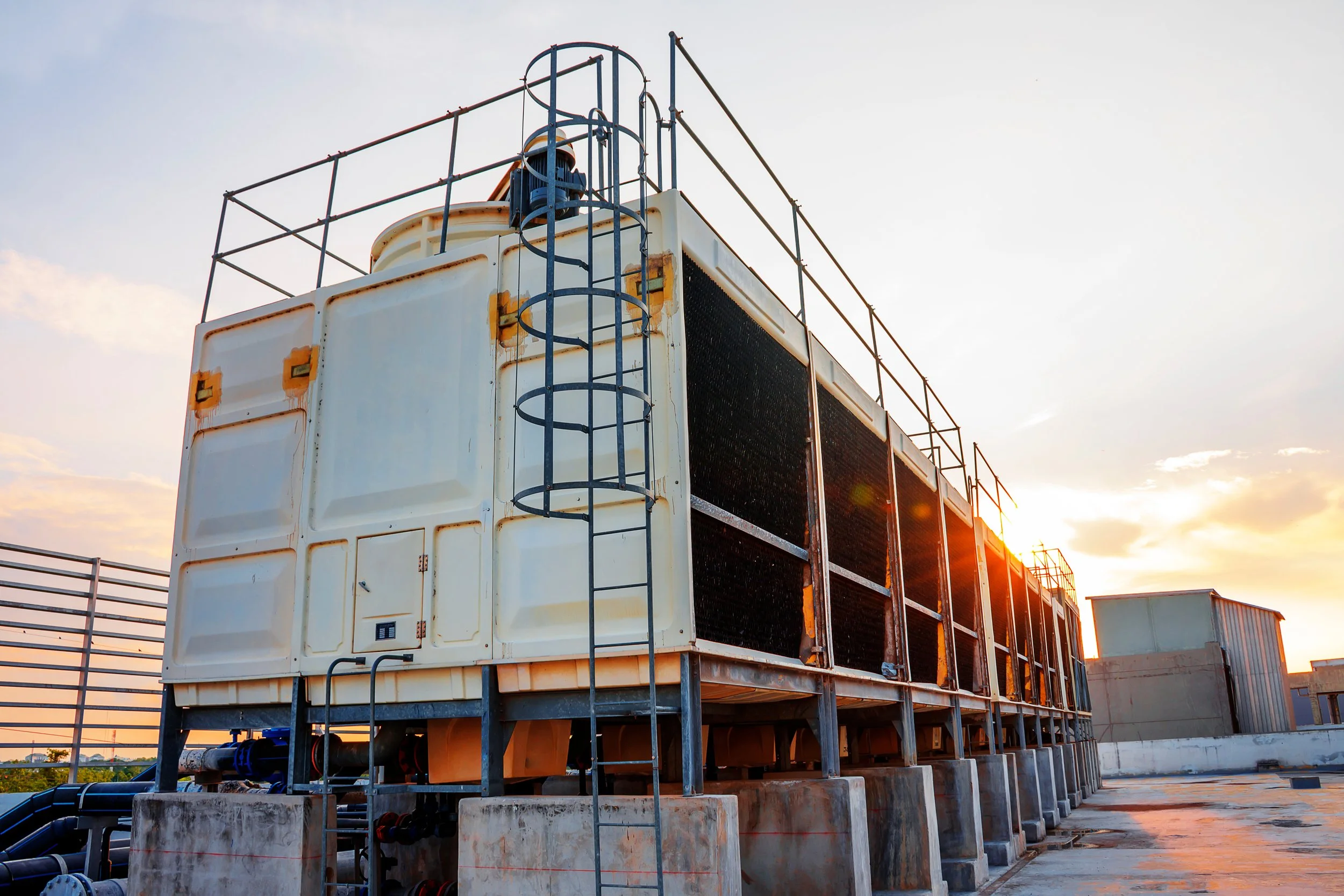
New Jersey Senate Bill S2188 passed on June 28, 2024, and signed by the governor on September 12, 2024 introduces new requirements in which all New Jersey building owners, New Jersey Department of Health (DOH), New Jersey Department of Environmental Protection (DEP), and public water utilities will need to comply in order to prevent the transmission of Legionnaires’ disease. The New Jersey Senate Bill 2188 is the first state regulation to require Legionella water management programs for all building types and water systems per ASHREA 188.
In addition to cooling towers, New Jersey S2188 also includes pools, spas and certain six-or-more-story residential high-rise buildings with centralized potable water-heating systems.
Pools, whirlpools and spas: A building containing a pool, spa, or whirlpool is covered. However, the law says the water-management program applies to the listed device, rather than automatically requiring a water-management program for the entire building.
Residential high-rises: The final version covers a residential high-rise structure with six or more floors if it has one or more centralized potable water-heater systems. So this is 6 or more floors, not "more than 6 stories."
Hot-water systems in other buildings: There are additional thresholds—for example, buildings with centralized potable water-heater systems serving 25 or more transient housing units, such as a hotel or motel, are covered.
Ordinary pool heating: The statute's pool/spa provision is aimed at the water system/device that releases water aerosols and Legionella risk. It does not simply say that every pool's heating equipment itself becomes subject to the law.
With a compliance deadline of September 12, 2026, building owners and operators must develop a water management program to minimize the growth and transmission of Legionella bacteria. A Legionella water management plan and program must be implemented for all water systems within the following facilities:
Nursing homes, assisted living facilities, comprehensive personal care homes
Healthcare facilities that provide in-patient services
Residential high-rise structures with six or more floors and one or more centralized potable water-heater systems
Buildings with one or more centralized potable water-heater systems shared by twenty-five or more housing units (including hotels and motels)
Buildings that the DOH determines to have been associated with an outbreak of Legionnaires’ disease
Federal, state, county, or privately owned/operated correctional facilities
A water management program must include the following:
A designated water management program team consisting of the building owner, building manager/administrator, maintenance/engineering employee, safety officer, equipment/chemical supplier, and a certified industrial hygienist.
A Flow Diagram and description of the potable and non-potable water systems within the building and/or onsite, including pumping schematics.
Safety and efficiency analysis of water system to identify potentially hazardous conditions to determine where control measures shall be applied to stay within established control limits.
A procedure for monitoring whether control measures are within operating limits and, if not, a plan for taking corrective action.
A verification strategy
Water Quality Monitoring
Parameters such as pH, temperature, and chlorine levels should all be monitored regularly to ensure that building water systems are operating as described in the facility’s WMP.
A validation strategy
Performing environmental sampling for Legionella.
Defensible documentation, which is essential and required for each step of the Water Management Plan.
Here’s what the law demands:
ASHRAE 188-aligned Water Management Program: A documented program that identifies risks in your water system, establishes control measures, sets monitoring routines, and outlines corrective actions when parameters go sideways.
Public notice: A posted confirmation that your building operates under an active water management program.
Five-year record retention: All procedures, testing results, corrective actions, and system documentation must be maintained and available for inspection.
New construction/repurposing verification: Buildings brought online or repurposed must verify their WMP before opening to the public.
Public water system requirements: Systems with 100+ service connections face additional mandates around disinfectant residuals, disruption notifications, and DEP disruption reporting within 72 hours.
Need to ensure compliance?